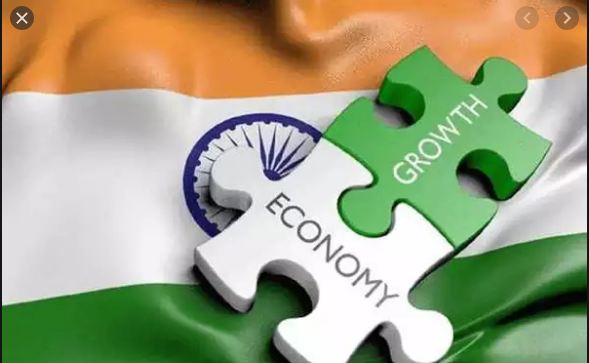
Economy: ‘Recovery faster; may go up by 14.2% in H1FY22’, says RBI
virendra pandit
Social Share
Virendra Pandit
Mumbai: The COVID-19 battered Indian economy is recovering faster than expected although inflation needs to be tackled, the Reserve Bank of India (RBI) said on Thursday.
While making a faster recovery, the country’s economy may also post a minor positive growth in the third quarter (ending December 2020). However, efforts should be redoubled to contain inflation to ensure it does not hurt ‘green shoots’ (incipient growth impulses), the RBI’s State of the Economy report said in the December bulletin.
“Indian economy is pulling out of COVID-19’s deep abyss and is reflating at a pace that beats most predictions,” the report said. Although there are headwinds, “steadfast efforts by all stakeholders could put India on a faster growth trajectory.”
The National Statistical Office’s (NSO) end-November release showed that the Covid-19 pandemic imposed retrenchment of the first quarter (April-June) was much shallower in the second quarter and the economy was reflating at a pace that beats most predictions.
The economy is now expected to post a positive growth rate of 0.1 percent in the third quarter. The fourth bi-monthly monetary policy in December also projected economic growth to be 200 basis points higher than predicted in October. It said the country’s economy could clock a growth rate of 14.2 percent in the first half of 2021-22 on top of 0.4 percent in the second half of 2020-21.
“Contractions forecast by various agencies for the year as a whole are being trimmed, and if the current momentum is maintained, the bounce back expected in the last quarter of the year may be stronger than postulated under baseline assumptions,” the central bank said.
During the pandemic, financial savings of households and corporations have risen, “waiting to be intermediated into productive investments rather than passive holdings of Statutory Liquidity Ratio (SLR) and non-SLR paper.”
With economic activities turning around, bank credit is also slowly gaining traction.
Therefore, with the policy emphasis now shifting towards the more durable drivers of the economy, private investment should turn its focus away from precautionary and deleveraging considerations “to CAPEX, capacity utilization and building of new capacities,” the report said.
Although total merchandise exports at USD 23.5 billion declined 8.7 percent year-on-year in November, non-oil exports maintained pre-pandemic levels for the third consecutive month. Sectors like drugs and pharmaceuticals, agriculture, pharmaceuticals, and iron ore showed resilience, while imports declined for the ninth successive month though the pace of contraction is moderating.
Oil imports declined 43.4 percent in November 2020 mainly due to soft international crude prices. But in a sign that demand is getting back in the economy, non-oil imports have returned broadly to pre-COVID levels, the report said.
Inflation
The resumption of market demand due to a slow return to normalcy, however, is putting some pressure on the inflation front. “A combination of rising international commodity prices and increasing pass-through to domestic manufactured goods and services prices, firms striving to recoup lost incomes by raising margins, and demand normalizing is adding to core inflation pressures,” the Bank said.
“Efforts need to be redoubled to excoriate the ‘worm in the apple’ – inflation – before it hurts the impulses of growth that are taking root. Efficient, effective, and timely supply management, including checking runaway retailer margins and reducing the incidence of indirect taxes on consumers, can break the back of the inflation pressures before they incipiently broaden and work against the intent of fiscal and monetary stimuli,” the RBI said.
Since September, India has managed to flatten the pandemic infection curve, barring some localized flare-ups. The recovery rate is close to 95 percent, and vaccine developments are at an advanced stage. Calibrated stimulus measures have also managed to support investment and consumption demand.
Sectors such as auto and capital goods, which had been hit hard by the lockdown are expecting a turnaround in forward earnings. Healthcare, information technology (IT), and fast-moving consumer goods (FMCG) companies are sighting a stronger earnings outlook.
“Moreover, intrinsic strength in the manufacturing and services sectors is being built as debt-servicing capacity is getting reinforced and leverage is being brought down. India’s farm sector is also forging ahead, backed by path-breaking marketing reforms,” the report said.